Monoculars and Phone Adapters: What 8x20 and "80x100" Really Mean
This page contains affiliate links. We may earn a commission at no extra cost to you.
On this page
A monocular is half a pair of binoculars: a small telescope you hold to one eye. It is lighter and cheaper than binoculars, fits in a pocket, and many now come with a clip that holds a smartphone behind the eyepiece for photos. Marketplace listings are full of impressive numbers, though, and some of them are physically impossible. This guide explains how to read monocular specifications, what phone adapters can and cannot do, and how to choose one for birdwatching, hiking, sports or checking an antenna on a distant mast.
Reading the numbers: magnification and objective size
Optics are described with two numbers, such as 8x20 or 10x42:
- The first number is magnification. An 8x monocular makes things look eight times closer.
- The second is the objective lens diameter in millimeters, the big lens at the front. A larger objective gathers more light, giving a brighter image, especially at dusk, but makes the device bigger and heavier.
Divide the objective size by the magnification to get the exit pupil. An 8x20 has a 2.5 mm exit pupil, which is fine in daylight but dim in low light. A 10x42 has a 4.2 mm exit pupil and is noticeably brighter at dawn and dusk.
| Spec | Exit pupil | Character |
|---|---|---|
| 8x20 | 2.5 mm | Pocketable, daylight use, easy to hold steady |
| 8x32 or 8x42 | 4 to 5 mm | Brighter, wider view, a good all-rounder |
| 10x42 | 4.2 mm | More reach, a little harder to hold steady |
| 12x50 | 4.2 mm | Long reach, best on a tripod or rest |
The "80x100" problem
You will see many listings advertising "80x100", "40x60" or similar. Read literally, 80x100 means 80 times magnification with a 100 mm objective lens. A real 100 mm objective is roughly the size of a large coffee mug, and a genuine 80x hand-held instrument would be almost impossible to use: the slightest movement would throw the target out of view, and the image would be very dim.
The compact devices sold under these labels have objectives far smaller than 100 mm and a much lower true magnification, often somewhere in the 10x to 16x range. The numbers are marketing, not optical specifications.
Treat any hand-held monocular claiming more than about 16x, or an objective size that clearly does not match the photos, with suspicion. Judge it by the physical lens size, the prism type, the buyer photos and the realistic description, not the headline numbers. Some of these products are still decent for the money; just do not expect what the label says.
Prisms and coatings
Monoculars use prisms to fold the light path and turn the image the right way up.
- BAK4 prisms are made from a higher-quality glass than the cheaper BK7 type and give a brighter, more evenly lit image without gray edges. Look into the eyepiece from a short distance: a round bright circle suggests BAK4, while a square-edged circle suggests BK7.
- Coatings reduce reflections. "Fully multi-coated" (FMC) is the best common grade. Be wary of strongly red or "ruby" coated lenses, which often reduce brightness and color accuracy.
Smartphone adapters: what to expect
Many monoculars include a clamp that holds your phone with its camera lined up behind the eyepiece. This technique is called digiscoping. It can produce satisfying photos of birds, wildlife and distant scenery, but it has limits:
- Alignment is fiddly. The phone camera must sit exactly centered over the eyepiece. Expect to adjust it each time, and phones with several rear cameras can be tricky; select the main camera manually if your phone switches automatically.
- Vignetting is normal. You will often see a dark circle around the image. Zooming in slightly on the phone hides it.
- Shake is magnified. At 8x to 12x, even a gentle tap on the screen blurs the photo. Use a timer, a Bluetooth shutter or volume-button trigger, and a tripod.
- Large phones and thick cases may not fit some clamps. Check the stated phone width range.
Tripods and stability
A small tabletop tripod transforms a monocular, especially at 10x and above. Check that the monocular has a standard 1/4-inch tripod thread, or that the phone adapter itself attaches to the tripod. Mini tripods included in bundles are usually light-duty; they are fine on a table or car roof but can tip over with a heavy phone attached. For hand-held use, bracing your elbows on a wall or fence helps a lot.
Choosing the right monocular
- For pocket carry and daytime use, a true 8x20 or 8x25 is light, easy to hold steady and good for hiking, travel and concerts.
- For birdwatching and dusk, a larger objective (32 mm or more) gives a brighter image.
- For photos, choose a model with a sturdy phone clamp and a tripod thread.
- For outdoor use, look for rubber armor and claims of water resistance or nitrogen purging to prevent internal fogging, and verify with buyer feedback.
- For eyeglass wearers, check for twist-up eyecups and a reasonable eye relief figure.
Practical hobby uses go beyond nature watching. Radio enthusiasts use monoculars to identify antennas on distant masts, and car and DIY fans use them to read labels or check roofs and gutters without a ladder. If you are into radio, see our first SDR buying guide; for measuring things you cannot see, try our EMF meters and Geiger counters guide.
Buying tips
Monoculars and adapters ship from marketplace sellers, often within one to three weeks. Check seller ratings and return terms, and look at buyer photos taken through the eyepiece rather than relying on product renders. Expect to spend a few minutes learning to focus and align the phone; the results improve quickly with practice.
Listings to consider
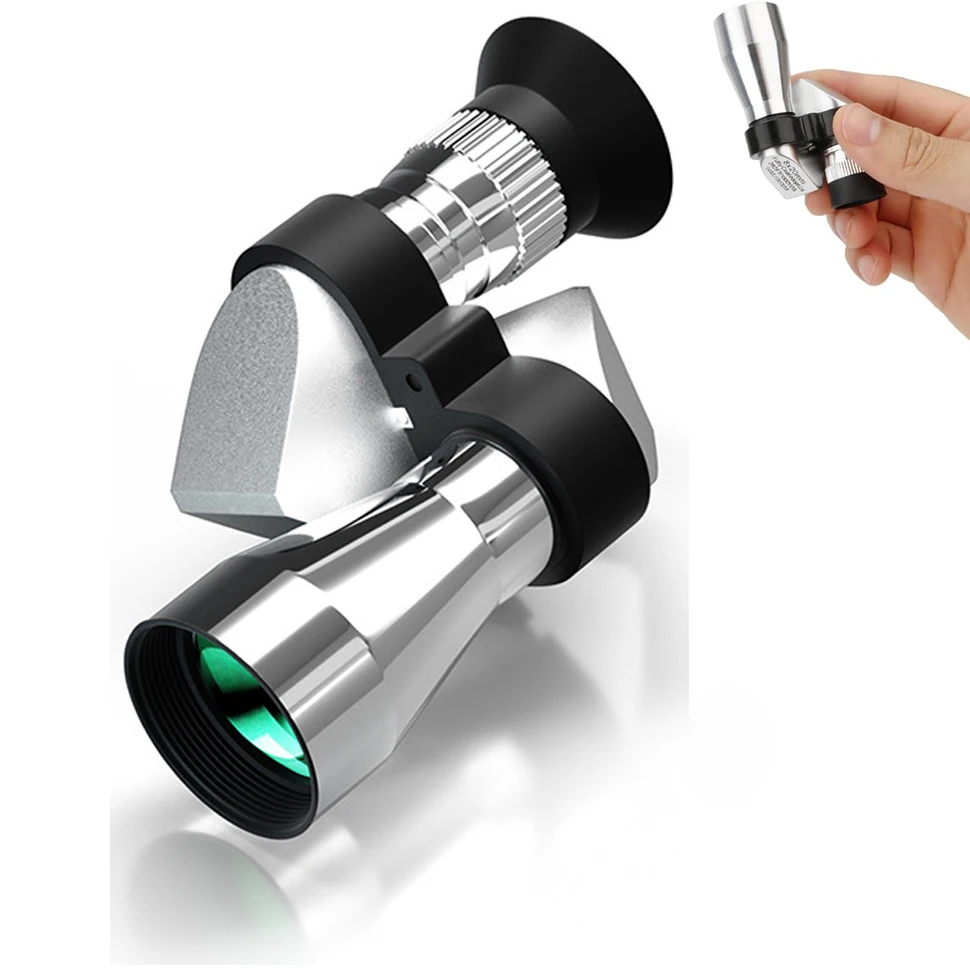
Compact 8x20 monocular with phone adapter
Pocket carryA small 8x20 monocular with a smartphone adapter, sized for a jacket pocket. Realistic specs make it easy to hold steady for hiking, travel and casual birdwatching. Its 20 mm objective gives a fairly dim image at dusk, and phone photos work best with the device on a tripod or rested on something solid.
Listing: Compact Monocular Telescope 8X20 for Adults Portable Handheld Mini Monocular with Smartph…

"80x100" monocular with tripod and adapter
Photo bundleA bundle with a BAK4-prism monocular, smartphone adapter and tripod, marketed as 80x100. That figure is marketing, not real magnification or lens size, so judge it by buyer photos and the actual lens diameter. The included tripod and clamp make it a convenient starter kit for trying digiscoping.
Listing: 80x100 HD Monocular for Smartphone Adapter & Tripod Telescope with BAK4 Prism for Birdwat…

RTL-SDR Blog V4 (for radio spotters)
Radio hobbyistsNot optics, but a natural companion if you use a monocular to spot antennas on masts: the RTL-SDR Blog V4 lets you hear what those antennas carry, from airband to weather satellites. It is receive-only and needs a separate antenna. Our first SDR guide explains what to pair it with.
Listing: RTL-SDR Blog RTL SDR V4 R828D RTL2832U 1PPM TCXO SMA Software Defined Radio Dongle Only